Turnstiles, Urns and Gaffer Tape: A Saturday in the Life of the NTFL Volunteer
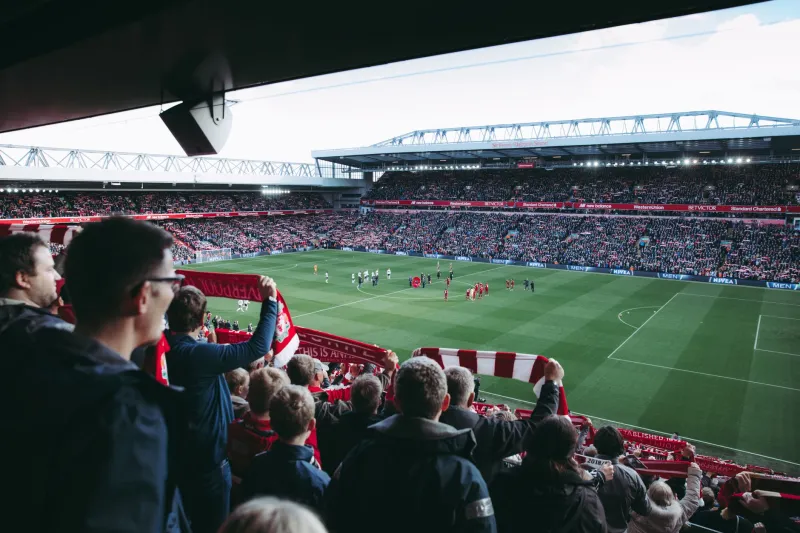
There is a version of a Saturday afternoon that most supporters never see. It starts at nine in the morning, in a car park that smells of wet tarmac and disinfectant, with a bloke called Dave wrestling a generator out of a van while somebody else asks whether the urn has been descaled this month.
By three o'clock, none of that work is visible. The gates are open, the programmes are sold, the tea is hot, the stewards are in place and the football looks like it just happens. It doesn't. It happens because roughly a dozen people at each NTFL club have decided that their Saturday belongs to the ground rather than to themselves.
9:04am — the gates aren't open, but the work is
At most NTFL grounds the volunteer day begins between 8:30 and 9:30. There's a check of the pitch after Friday night's rain, a walk of the perimeter to see what the wind has done, a sweep of the terraces for the sort of rubbish that shouldn't greet a paying customer. Somebody unlocks the tea bar and discovers the fridge has been left on the wrong setting again. Somebody else counts a float into a cash tin with the concentration of a bomb-disposal officer.
There is a particular kind of conversation that happens at this hour, and it is almost always about logistics rather than football. Who's got the keys to the away dressing room. Whether the second turnstile is still sticking. Whether the club shop has enough of the small badges because the last home game cleared them out.
By half ten, the programme seller is usually at her post, which is earlier than anyone strictly needs her to be, and that is the point.
The roles nobody advertises
Ask a supporter to list the jobs at a football club and they will say manager, players, maybe a physio. Ask a volunteer and they will give you a list that runs to a page and a half.
Turnstile operators are the first face of the club and the last line of defence on a broken card reader. They take cash, they take grief, and they develop an uncanny ability to spot a child trying to get in on an adult ticket from about forty yards.
Programme sellers are part fundraiser, part information desk. They know which turnstile has the shorter queue and they will tell you, unprompted, even if you didn't ask.
Stewards in the NTFL are not the hi-vis wall of a Premier League ground. They are usually three or four people who know the ground intimately and can spot trouble before it becomes trouble — a lad who's had a few too many, a group drifting towards the away end when they shouldn't, a gate that's come unlatched in the wind.
The tea-bar crew is the one that everybody underestimates. A busy NTFL tea bar can shift several hundred cups in ninety minutes, and the queue at half-time is not a queue, it is a social event with a biscuit at the end of it.
Then there are the invisible roles. The person who does the banking on Monday. The person who washes the kits. The person who spent Wednesday evening printing and folding programmes because the printer at the ground gave up. The person who puts the nets up and takes them down and has done so for eleven years without once being asked.
What breaks when someone doesn't turn up
This is where the romantic version of volunteering meets the practical one. When a turnstile operator calls in sick, the queue at the other gate doubles and the kick-off is preceded by forty minutes of mild chaos. When the tea bar loses a body, half-time becomes a genuine operational crisis and the club loses money it was counting on.
But the real fragility sits in the roles that are less visible. If the person who handles the cash and the paperwork is away, the club can spend the following week unpicking it. If the programme printer's mate doesn't step in, there is no programme, and a small but real slice of matchday identity disappears with it.
Several clubs we spoke to described the same pattern. They have enough volunteers for a normal Saturday. They do not have enough for a Saturday when two of them are on holiday, one has a family wedding and the weather has turned. The bench, in volunteer terms, is short.
Why they keep coming back
Nobody does this for the money, because there isn't any. Some clubs offer a free pint, some offer a meal, a few offer nothing beyond a thank you and the vague sense that it would fall apart without them.
What comes up again and again in conversation is belonging. Volunteers talk about being recognised, about the kids who say hello by name, about the fact that when they walk into the ground on a Saturday they are not a customer. They are part of the thing itself. One programme seller, twenty-three seasons in, put it simply: the football is the excuse. The Saturday is the point.
There's also a hard-headed side to it. Volunteers see the club's finances in a way supporters don't. They know what the electricity bill did this year. They know the floodlight that needs replacing. Once you've counted the float and reconciled the takings, you stop thinking of the club as an abstraction and start thinking of it as something with a bank balance and a leaky roof.
The recruitment problem
Every NTFL club will tell you the same thing: the core is ageing and the replacements aren't arriving fast enough. Younger supporters are happy to turn up at ten to three and leave at ten to five. Asking them to arrive at nine and stay until six is a bigger ask than it used to be, and clubs know it.
Some are trying. A few have started advertising volunteer roles in the same places they advertise fixtures. Others have made a point of pairing new recruits with experienced ones so nobody is left holding a cash tin on their first Saturday. One club runs an informal rota that lets people commit to one match a month rather than every week, which sounds like a small thing and has, by their account, doubled the pool.
A word about the tea bar
If you take one thing from this, take this. Next Saturday, when you're queuing at half-time and the urn is running behind and the woman serving has been on her feet since nine, remember that she has already done four hours of work before the football started, and she is doing it for nothing but a free brew and the pleasure of your company.
Say thank you. It costs nothing, and it is the entire wage packet.