One Eye on the Car Park: Inside the NTFL's Early-Exit Ritual

Photo: Tim Sheerman-Chase, CC BY 2.0, via Wikimedia Commons
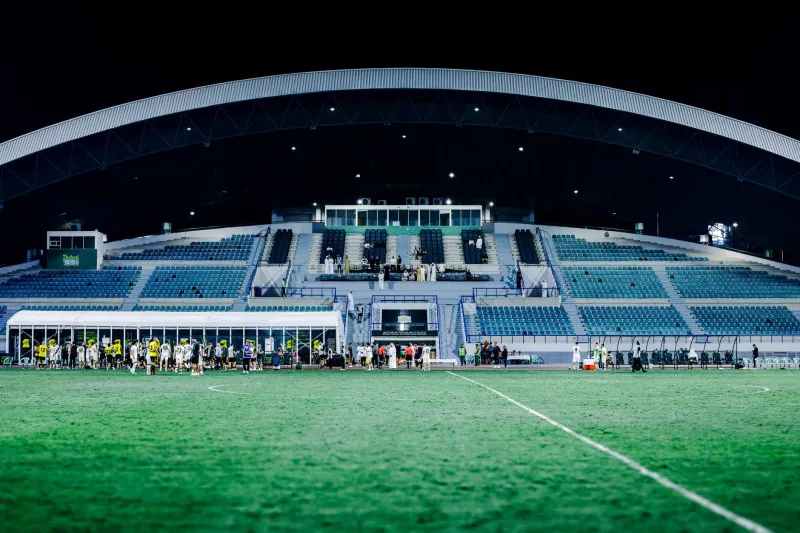
At Harnwick Colliery on a raw October afternoon, the away end had already begun to thin when Brackenford Town won a corner in the 88th minute. By the time the ball was cleared, a steady trickle of supporters had become a small river heading for the gate. Then the corner came back in, a header looped off a defender's shoulder, and the net bulged. The roar was real, but it was also half a roar. A good chunk of the people who would have loved it most were already halfway up the hill towards the car park.
That scene has been repeated across the NTFL all autumn. The league's matchday feed has logged 41 goals in the 85th minute or later across the opening 14 rounds of 2026/27 — roughly one every seven games — and nine of them have changed the result. Late drama is not a rarity in this league. It is practically a scheduling feature. So why do so many fans keep leaving before it arrives?
The Numbers Behind the Shuffle
Let's be clear: the early exit is not a new phenomenon. It has been part of British football since the first fan realised the 17:02 train waited for nobody. But the NTFL's particular geography makes it sharper. Smaller grounds, tighter car parks, fewer late buses and a lot of supporters who have a long drive home. When the fourth official holds up a board showing four added minutes, a calculation kicks in that has nothing to do with belief and everything to do with the A road.
At Calderport Rovers, steward Denise has watched the same ritual for eleven seasons. She stands by the main gate as the clock ticks past 85 and sees the same faces every fortnight.
'It is not disrespect,' she says. 'It is logistics with a scarf on. They are not leaving because they think we are beaten. They are leaving because the car park exits onto a roundabout and if you miss the first gap you are there until Tuesday.'
Who Leaves, and Why
The early leavers are not one tribe. There is the train-timetable crowd, clutching a phone with the live departure board open. There is the parent with a child in a junior shirt, doing the mental arithmetic on bedtime. There is the driver who has already worked out that a five-minute head start saves twenty minutes on the ring road. And then there is the superstition lot, the ones who genuinely believe that staying until the end is the reason the team keeps conceding.
'I always leave on 87,' one regular at East Fen Athletic tells me, as if confessing to a minor crime. 'I know it sounds daft. But every time I stay, we lose a goal. Every time. My mate says I should stay more often. I say I am doing my bit.'
That is the thing about the early exit. It is rarely a judgement on the team. It is a negotiation with real life. The same fan who leaves early on a Tuesday night will be there at 11am on a Saturday for a reserve game. Loyalty in the NTFL does not always look like a full stand at full time. Sometimes it looks like a flask, a folded programme and a very brisk walk.
The Ones Who Never Budge
Then there are the lifers, the ones who treat the final whistle as a sacred appointment. At Marlock United, a group of six regulars occupy the same spot on the rail and refuse to move until the referee has blown and the players have done the handshake. They have seen last-minute winners, last-minute heartbreak and one memorable afternoon when a goalkeeper scored from a wind-assisted clearance in the fourth minute of stoppage time.
'You cannot leave,' says one of them, a retired teacher called Bernard. 'The whole point of football is that it is not over until it is over. If you leave, you are writing your own ending. And your ending is usually a queue on the dual carriageway.'
There is a quiet moral hierarchy on some terraces about this. The stayers rarely say anything out loud, but they notice. The leavers notice too. Nobody wants to be the person who missed the goal that gets replayed on the local news for a decade.
What Actually Gets Missed
Late goals are the obvious loss. But the 85th-minute exodus also misses the smaller stuff: the desperate block, the keeper going up for a corner, the booking for a shove on the edge of the box, the full-time handshake between a captain and a manager who has spent ninety minutes shouting at him. It misses the moment when the match stops being a result and becomes a story.
There is a reason the best away days are the ones that end in chaos. Nobody remembers the clean, comfortable 2-0 that finished on time. They remember the equaliser in the 94th, the scramble, the ridiculous celebration, the stranger hugging you like a long-lost relative. The early leavers miss that. But they also get home for tea.
A Ritual, Not a Crime
The 85th-minute exodus is not going anywhere. It is part of the rhythm of the NTFL, as predictable as the half-time queue and the pre-match programme sellers. Clubs could probably do more to help — a late-goal screen in the car park, perhaps, or a better bus timetable — but there is something oddly honest about it too. It says that football is one part of a life, not the whole of it.
Still, if you are ever tempted to head for the exit with five minutes left, do a quick check. Is there really a train at 17:04? Is the car park really that bad? And is there a small chance, just a small one, that the next five minutes will give you the story you will be telling in the pub for the next five years?
Sometimes, it is worth one more minute. Sometimes, it is worth staying until the final whistle. And sometimes, the car park will just have to wait.