Nobody Wrote This Down: A First-Timer's Guide to NTFL Terrace Etiquette
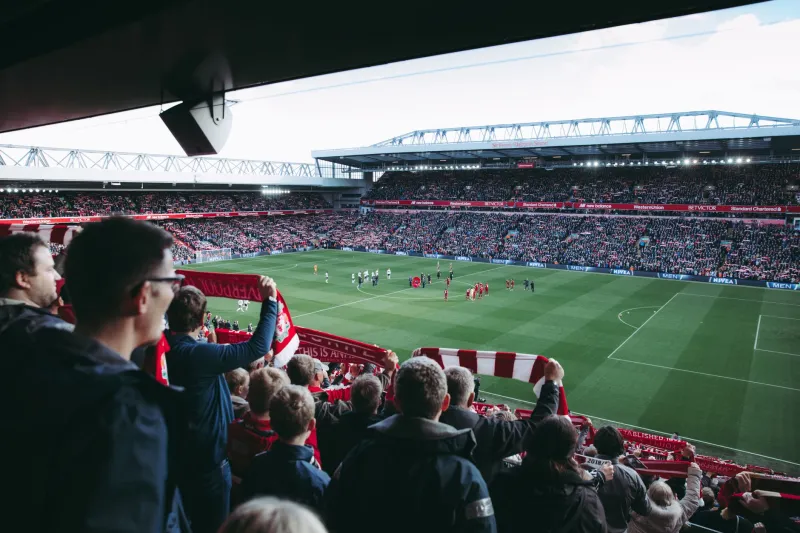
Your first NTFL matchday can feel like walking into a conversation that started twenty minutes ago. The football is the easy bit. The rest — where to stand, when to sing, how to hold four pints and a programme without ruining either — is a code nobody prints on the turnstile.
We asked regulars at three clubs to explain the bits they wish someone had told them. Their answers were less about rules and more about paying attention.
First five minutes: find a sightline, not a stage
Stand where you can see the game and where you are not blocking someone else's view. That usually means the edge of a terrace, a spot near a pillar, or the back of a shallow step. It does not mean the middle of the gangway with a bag at your feet and a phone held at eye level.
Danny, who has stood on the Calderton Town end for three decades, says you can spot a newcomer by the way they plant themselves in the one place nobody else wants. 'They mean well,' he says. 'They just haven't learned that the best spot is often the one that looks a bit awkward.'
If you are in the away end, be honest about it. You do not need to apologise for supporting the other team. You do need to avoid celebrating like you have stumbled into a home pub by mistake.
Chanting: join on the second lap
Nobody expects a first-timer to know every verse. They do expect you not to start a different song while the first one is still going.
Mags, a Harborough Rovers regular, puts it simply: 'Listen for the second run-through. By then you know the tune, the pace and whether it is one of the ones that speeds up.' Clap along if you are not sure of the words. Join in when you are. Do not film the whole thing with your arm in the air.
There is also a time and a place for silence. A terrace can go quiet after a bad goal, a dodgy decision or a long injury stoppage. That quiet is not an invitation for a solo chant. Read the room.
The half-time queue is a social contract
The queue for the tea hut is not a casual suggestion. It is a temporary society with its own etiquette.
Know what you want before you reach the front. Have your card or cash ready. Do not send a mate to join you halfway through with a complicated order for four people and a request for extra gravy. And when you head back to your spot, do not try to squeeze through the middle of a row with two hot drinks and a pie.
Owen, who follows Penryn Athletic home and away, says the queue moves faster when everyone accepts it is a queue. 'The people who moan about it are usually the ones holding it up,' he says. 'The people who get on with it are the ones who get served.'
What to shout, and what to leave at home
A good terrace comment is short, loud and ideally funny. A bad one is personal, repetitive or aimed at someone's family. The difference matters.
You can groan at a misplaced pass. You can question a substitution with the time-honoured phrase 'have a go'. You can even have a go at the referee, as long as it stays in the realm of theatre rather than genuine venom. What you should not do is spend ninety minutes berating your own players before they have had a chance to settle.
Newcomers often think the loudest fan is the most respected one. Usually it is the opposite. The regulars who matter are the ones who know when to lift the team and when to leave it alone.
Phones, pints and the 85th-minute exit
Phones are part of modern matchdays, but they should not become the main event. A quick check of the other scores is fine. Filming a goal is fine if you are not blocking the view of the people behind you. Holding your phone up for the entire second half is not fine.
If you have to leave early — and sometimes you do — edge towards the aisle before the ball goes dead. Do not stop on the steps to watch the corner. Do not stand in the gangway to finish a conversation. The 85th-minute exit is a manoeuvre, not a protest.
Away days: you are a guest
Away travel is where the code gets tested. You are in someone else's town, someone else's pub and someone else's ground. The stewards have heard every joke before. The local pub may not be set up for two hundred people arriving at once. The residential streets around the ground are not a stage.
Find the designated away pub if there is one. Ask before you move furniture. Learn the bar's rules on glasses and singing. And if a steward gives you a sensible instruction, follow it. Most of them are trying to get everyone home safely.
The small rituals that make it a habit
Every club has them. The programme seller who has been on the same corner for years. The half-time draw nobody wins. The lucky turnstile. The same spot on the terrace that feels wrong if someone else is standing there.
Newcomers do not need to adopt all of it at once. Pick up the programme. Put a pound in the draw. Stand in the same place twice. The rituals are not a test. They are just the things that turn a first visit into a habit.
The terrace code is not written down because it does not need to be. It is about noticing other people, reading the moment and not making yourself the main character. Do that, and nobody will ask how long you have been coming.
They will just assume you know.