The Free End: The NTFL's Unofficial Viewing Spots and the Regulars Who Swear By Them
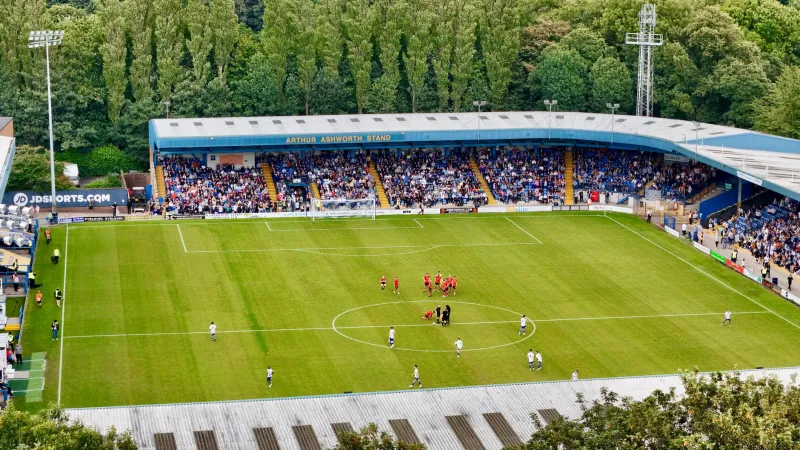
It is 2.58pm at Marsh Lane and the turnstile queue is doing what it always does: shuffling, sighing, and pretending the drizzle is not getting worse. Twenty yards to the left, behind a waist-high fence and a row of buddleia that nobody has cut back since summer, a retired couple are setting up two camping chairs. They have a flask, a blanket and a view of the far penalty area that most paying customers would trade a tenner for.
This is the free end. Not an official stand, not a terrace, not even a recognised piece of land — just a spot on the edge of things where the football happens to be visible. Every NTFL ground has one. Some have three. And the people who use them are not chancers, or at least not only chancers. They are regulars, and they will tell you, with real conviction, that they have the best seat in the house.
The Gap in the Leylandii
At Bexhill Athletic, the unofficial viewing area is a strip of grass behind the away goal, accessible through a gap in a leylandii hedge that has been widened by roughly forty years of shoulders. The club knows it is there. The secretary, who has been in the job since the ground had a different name, says they stopped trying to block it in the nineties.
"We put a fence up once," she says. "Taller than this one. Then a lad fell off it trying to see over and we thought, what are we doing? It is a football match. If someone wants to watch from the hedge, let them watch from the hedge."
That is not a universal attitude. At Harrowgate Road, the committee installed waist-high railings and a polite sign asking spectators to use the turnstiles. It lasted a season. The railings are still there, but the sign has gone, and on matchdays a steward will usually wander over at half-time to check nobody is standing somewhere genuinely dangerous — on a wall, say, or halfway up a tree.
Allotments, Embankments and the Pub Window
Not every free view is a hedge. At Coldharbour, the railway embankment runs along the east side of the ground, and a well-worn path leads up from the recreation ground car park to a spot where you can see two-thirds of the pitch and all of the floodlights. The regulars there are a mix of dog walkers, teenagers and a handful of older fans who gave up buying a season ticket when the prices went up and the standing area went down.
"I still put money in the bucket," one of them says, nodding towards the club's volunteer-run fundraiser. "I just do not want to sit down. And I am not paying eighteen quid to stand behind a barrier when I can stand on a hill for free."
Then there is the pub. The King's Head at Marsh Lane has a function room window that looks directly over the ground's north-west corner. On matchdays, the room is booked out by a group of locals who arrive at one, order a round, and settle in for the afternoon. The landlord says he has never had a complaint from the club. "They know us," he says. "We are not causing trouble. We are just watching the football with a pint. Is that not what everyone else is doing?"
What Clubs Actually Do About It
Ask clubs about unofficial viewing spots and you get a mixture of resignation, pragmatism and the occasional flash of irritation. Nobody wants to be the club that chases a pensioner off a footpath. But nobody wants to be the club that has to explain an injury either.
Most of the people we spoke to said the same thing: it is about safety, not money. If the view is from a public footpath, a pub window or an allotment, there is not much a club can do. If it is from a wall, a roof or a piece of scaffolding, they will step in. Several clubs now include a line in their matchday safety briefing about "perimeter spectators", which is club-speak for people watching from outside.
At one ground, the committee decided to lean into it. They put a bench on the embankment path and a bin next to it. The thinking was simple: if people are going to stand there anyway, at least let them do it somewhere that does not involve trampling the flowerbeds. It has become, unofficially, the cheapest away end in the league.
Why They Keep Coming Back
There is a temptation to frame all of this as freeloading. That would be missing the point. The people watching from the hedge are not there because they hate the club. They are there because they love the football, and the matchday, and the feeling of being near it — but for whatever reason, the turnstile is not the right fit. Money, mobility, kids, dogs, a dislike of crowds, a refusal to pay for a seat they will not use.
What the free end offers is a different kind of belonging. It is not membership. It is proximity. You can hear the shouts, smell the chips, see the floodlights come on. You are part of the afternoon even if you are not part of the gate.
And on a cold Saturday in November, with the rain coming sideways and the game drifting towards a goalless draw, that is worth something. Maybe not eighteen quid. But something.
The View From Outside
If you are planning an away day and fancy saving a few pounds, the free end is not a secret. Ask a local. Look for the footpath that runs behind the goal. Follow the dog walkers. But do not treat it as a loophole, and do not take the mick. Clubs tolerate these spots because they understand what they are: a safety valve, a community service, a quirk of the grounds that makes NTFL football what it is.
At 4.55pm at Marsh Lane, the retired couple pack up their chairs. The game has finished 1-1. They did not pay in. They did not see the winner, because there wasn't one. But they saw the whole match, and they will be back next week, same spot, same flask.
"Best view in the league," the man says, folding the blanket. "And nobody stands in front of you."
You cannot argue with that.