Frozen Corner, Full Car Park: The Strange Morning Ritual of an NTFL Postponement
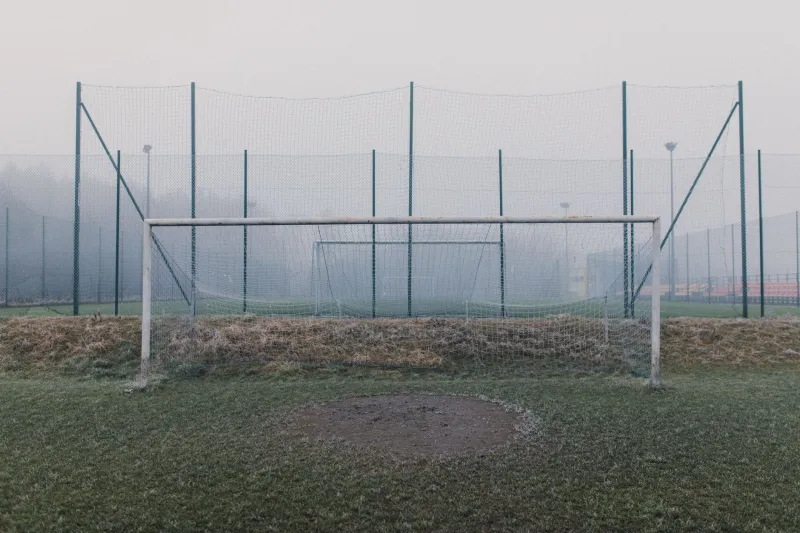
There is a particular sound a Saturday makes when it dies. Not a whistle, not a groan from the terrace — just a phone buzzing on a bedside table at 8:47am, and a message in a WhatsApp group that reads, simply: "inspection at nine, will confirm."
And then the waiting. Anyone who has followed an NTFL club through a British winter knows that half-hour. The kettle goes on and nobody drinks the tea. Somebody in the group asks whether it's worth setting off anyway. Somebody else replies with three crying-laughing emojis, which is the closest the modern fan gets to gallows humour.
The Volunteer Who Gets There First
Long before a referee is anywhere near the ground, the pitch has already been walked by someone who did not want to be up this early. Usually it is the same person who painted the lines in November and who will spend the following week apologising to strangers.
They arrive in a coat over whatever they slept in, torch in hand in December, and they do not simply look at the pitch. They look at the bits of the pitch nobody looks at in August. They stand in the goalmouth. They dig a heel into the corner nearest the clubhouse, the one the stand shades from about October onwards, the one that has not seen direct sunlight since the clocks went back.
What They Are Actually Looking At
Ask a long-serving NTFL secretary what kills a fixture and you get a list that has almost nothing to do with how the game would actually play.
- The frozen corner. A patch the size of a dining table, hard as a paving slab, in a spot the assistant referee will be sprinting through at 3:15pm. Nobody wants that liability on their conscience.
- The goalmouth. Six yards of mud in February, six yards of concrete in January. Both are a problem for different reasons.
- Standing water. The old ball-drop test still holds sway. If it stops dead, you are not playing. If it skids, you probably are.
- The surrounds, not the pitch. Touchline run-offs, the slope by the tea hatch, and the car park that turns into a lake and takes an hour to empty.
- The forecast between nine and three. A club can forgive the frost it has; it worries about the rain that is still coming.
None of this is written down anywhere, which is part of the charm and most of the frustration. Every club has its own folklore about the day it should have called it off and didn't, and the day it called it off far too early and looked daft by lunchtime.
Then the Referee Gets Involved
Here is the bit that surprises newcomers: the club does not, strictly, call the game off. The referee does. A club inspection is a courtesy, a time-saver, often a formality agreed over the phone with a local official who lives ten minutes away and would rather be told at eight than drive over at ten.
The formal version — referee walks the pitch, decides, tells both secretaries — is what protects everyone. It is also occasionally ignored, which is how you end up with the familiar spectacle of a game being abandoned forty minutes in because someone talked themselves into it at 9:30am. Most NTFL officials have learned the hard way that a pitch which is borderline at nine is usually worse by two, not better.
How the News Travels
Clubs break the news at wildly different speeds, and this is where away supporters get burned.
The good ones post by 8:15am: clear language, a rescheduled date if they have one, an apology that sounds like a human wrote it. The great ones ring the away club's secretary before they post, so the coach company can be stopped and the minibus doesn't roll out of a retail park for nothing.
The bad ones post a photograph of a puddle and a single word. You know the type. Someone at the club thinks it's charming. It is not charming when you are 40 miles away with a flask and a hangover.
The Limbo Hour
Between the first sighting of frost on the car roof and the official word, there is a strange dead zone in the NTFL Saturday. You do not want to get changed. You also do not want to be the person who has to get changed in a service station toilet because the game was on after all.
Terrace etiquette here is loose but real: nobody posts "is it on?" more than twice, and if someone does, they get the link to the club's page and a mildly passive-aggressive thumbs up. Meanwhile the kit bag stays by the door, unzipped, optimistic.
If You Have Already Set Off
Practical advice, from people who have learned it the expensive way:
- Check the club's social feed and the league's fixture page before you turn the key. Not the night before. Before.
- Anything over an hour's drive, ring the home club. Most secretaries will happily give you a straight answer at 8:30am. Most of them would rather you asked.
- A postponement is not a refund event. Tickets are almost always honoured for the rearranged date. Ask about coach costs before booking, not after.
- Park where you can get out. If you do go, and it's grim, the car park will be the last thing to thaw.
A Word for the 7:30am Call
Clubs get grief either way. Call it early and you get accused of cowardice by people who fancied a pint and a scrap. Call it late and you get accused of wasting a minibus full of diesel and goodwill.
On balance, the early call is the kinder one. A postponement at 7:30am costs a supporter nothing but pride and a lie-in. A postponement at 10:40am costs money, and it costs patience, and it grates for weeks.
So spare a thought for the person in the coat, standing in a frozen corner at 8:45am, making an unpopular decision for free. And if the text that lands at 9:12am says "game on", don't overthink it. You'll be in the car before you've found your other boot.