The Bucket, the Ice and the Bloke Who Knows Your Hamstring: Life With an NTFL Volunteer Physio

Photo: volunteer sports physio treating football player on sideline bench with ice, via www.volunteerconnection.net
At 2.07pm on a Saturday, the most important person at many NTFL clubs is not the striker who has scored four in three, nor the manager pacing the technical area like a man who has left the oven on. It is the volunteer in the club polo shirt, crouched by a folding bench, asking a 28-year-old centre-half to point at exactly where it hurts. The bucket is beside them. The ice bags are sweating. The magic sponge is, as ever, mostly a state of mind.
In the NTFL, injury time means something entirely different. It is the frantic hour before kick-off when a volunteer physio tries to turn a swollen ankle into a matchday squad number, and the quiet ten minutes afterwards when they work out whether the lad who said he was fine is actually fine. It is less Premier League medical department, more mobile triage unit with a kettle nearby.
The Treatment Table Is a Folding Bench
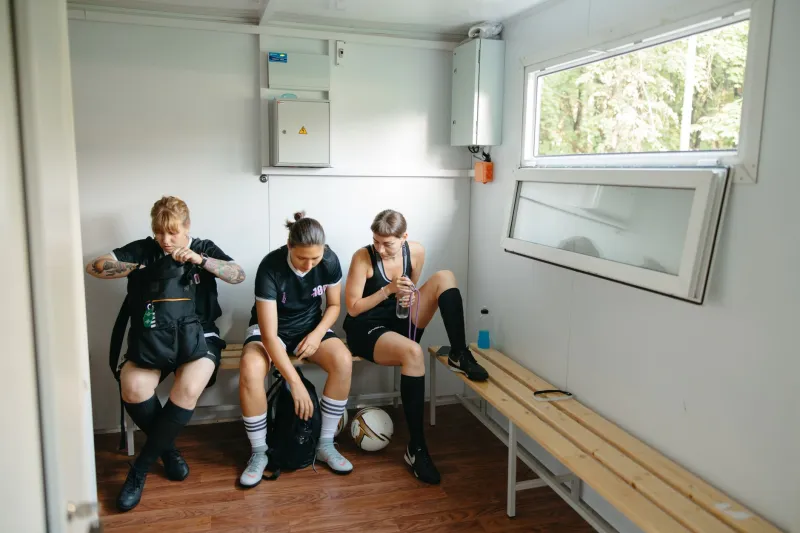
Very few NTFL physios have a proper room. Some have a converted cupboard that smells of Deep Heat and old banners. Others have the corner of a clubhouse where the pool table used to be, or a bench in the changing room that doubles as a coat rack at half-time. One volunteer described her setup as 'a first-aid kit, a packet of frozen peas and a philosophy.'
The philosophy matters. Most of these people are not full-time clinicians. They are sports therapists, retired nurses, parents who did a course, or former players who know the difference between a dead leg and something that needs a hospital. They are not there to perform miracles. They are there to make a sensible call in an unreasonable timescale.
That call usually starts with a question: can you play, or can you not? The player says yes. The physio looks at the ankle, then at the player, then at the manager hovering by the door. The manager says nothing, which is its own kind of pressure. The physio says something like, 'Let's test it.'
Triage by Torchlight
NTFL matchdays are not short of drama, but the real theatre happens before the warm-up. A winger arrives with a knee that has been 'a bit stiff since Tuesday'. A full-back has a back that went at work on Thursday. A goalkeeper has a thumb that is definitely not broken, according to the goalkeeper. The physio has twenty minutes to sort the serious from the optimistic.
Volunteers talk about the weekly scramble with a mix of affection and exhaustion. Ice comes from the club freezer, the petrol station or a helpful parent with a cool bag. Strapping tape is rationed. There is always one club where the physio bag contains a defibrillator, three bandages and a Snickers, and nobody is entirely sure which gets used most.
The grimace-inducing tales are part of the job. There is the player who tried to run off a dislocated finger. The one who asked for a 'quick strap' on a hamstring that had already gone. The centre-back who insisted he was fine, then spent the entire second half standing in the same spot like a man guarding an invisible gate. The physios remember these stories because they are the ones where they had to be the adult in the room.
The Gaffer Wants a Yes, the Knee Wants a No
The relationship between volunteer physio and manager is one of the NTFL's great unspoken negotiations. The manager wants options. The physio wants honesty. The player wants to play, or at least wants to be seen to want to play. Somehow, a decision gets made.
Most physios say the trick is not to win the argument but to give the manager a clear answer. 'If I say he can't, he can't,' one said. 'If I say he can try ten minutes, then we're all agreed on what that means.' That clarity is worth more than any strapping technique. It also protects the volunteer, who is giving up their Saturday to make calls that professional clubs pay people to make.
There is humour in it, too. The half-time rush, when three players need attention and the kettle is boiling. The moment a substitute claims he is 'tight' but is really just cold. The manager who asks for a magic sponge and gets a raised eyebrow instead. The physio is often the only person at the club who can tell a player the truth without it being a tactical decision.
What the Bucket Actually Contains
The bucket is not magic. It usually contains water, a sponge, maybe some tape, and a faint sense that tradition demands it be there. The real work is in the assessment: watch the player walk, ask where it hurts, test the movement, decide what is safe. A volunteer physio might see fifteen players in a morning and still be the last to leave, packing ice bags into a bin liner while the bar fills up.
They are not heroic in a television sense. They are just there, week after week, in all weathers, doing the less glamorous side of the beautiful game. They patch up players who will probably ignore half the advice. They send the occasional one to A&E. They tell the gaffer the truth. And they keep the whole Saturday moving, one strapped ankle at a time.
So next time you see the bucket by the dugout, give the person holding it a bit of room. They have probably already had a week of it.